Pages

What's the difference between an arboretum and a botanical garden?

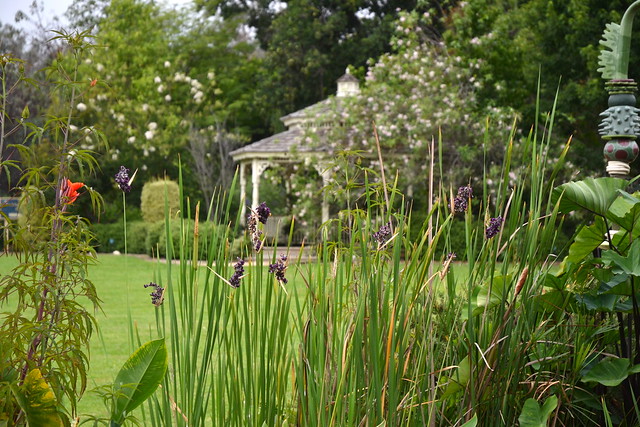
Gazebo at the Los Angeles County Arboretum and Botanic Garden. Photo credit: Tracy Hall.

Given that “arbor” means “tree” in latin, “arboretum” implies a focus on trees, woody species. Indeed, someone wrote on Wikipedia that in the narrowest sense, an arboretum is exclusively a collection of trees. If the definition of “tree” includes all woody plants, then an arboretum may also include shrubs and vines.

In contrast, a botanical garden typically exhibits a “wide range of plants” (Wikipedia; American Public Gardens Association). Sometimes that includes a significant number of trees in my experience, and that’s where a botanical garden can start to resemble an arboretum. In nature, woody species coexist with herbaceous plants after all. Conversely, an arboretum can start to look like a botanical garden when in addition to trees, it contains noteworthy collections of herbaceous plants. Then you have places like the Los Angeles County Arboretum and Botanic Garden that proclaim outright to be both.

Hill (1915) traces the history of most modern botanical gardens to “physic gardens,” European gardens focused on medicine and research, specifically the “hortus” (vegetable garden with eighteen beds probably arranged in two rows of nine) and “herbularius” (physic garden with sixteen beds of plants, placed near the infirmary, probably for convenience) of monasteries like that of St. Gall in the ninth century. (An interesting side note, he recalls Gregor Mendel’s famous genetic experiments on peas, which Mendel completed as a monk “in the monastic garden at Brunn.”)

Landscape plan of the physic garden at the Monastery of St. Gall, excerpted from Hill (1915) names the plants to be planted in each of the numbered planting beds.

Universities and monasteries and private landowners established physic gardens to ensure a clear source of medicinal plants supplied apothecaries (“to safeguard the Practitioner against the Herbalist” and drug peddlers), and in Europe these gardens have become botanical gardens. In the mid-1500s, non-medicinal plants, especially rare plants, were introduced to physic gardens “for the purpose of observing and admiring nature.” By the latter half of the sixteenth century, “the tendency was to grow as many plants as possible, and a healthy rivalry commenced...as to who could show the greatest number of different species in cultivation.” (Hill 1915)


Hill said the historic Botanical Garden of Padua (Orto Botanico di Padova) in Italy privately established in 1545 was preserved much in its original sixteenth century condition (at the time of writing in 1915) and is a good example of garden design popular in Europe in the sixteenth and seventeenth centuries. The garden is a UNESCO World Heritage Site. Photo credit: Xiquinho Silva.

The practice of collecting medicinal and economically important plants in gardens predates physic gardens. Hill writes, “The Chinese...should, as might be supposed, be credited with being the real founders of the idea of botanic gardens, since it is clear that collectors were despatched to distant parts and the plants brought back were cultivated for their economic or medicinal value.” He notes Emperor Shen Nung from the twenty-eighth century B.C. who supposedly “tested the medical qualities of herbs and discovered medicines to cure diseases.”

Whereas the driving force behind the founding of botanical gardens in temperate climates was to produce herbs for medicinal use and research, gardens were created in the tropics (beginning in 1764 on the Island of St. Vincent by the British) to collect economically important plants (spices in particular).


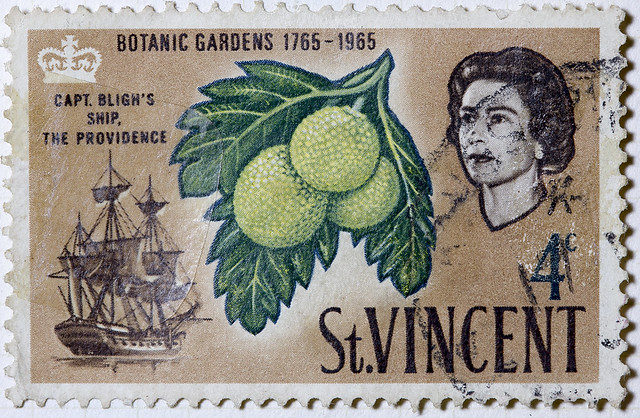
Botanic Gardens St. Vincent was the first garden created by the British in the tropics for the purpose of collecting economically important plants. Plants destined for the St. Vincent garden were lost in the 1790 mutiny of the Bounty. In 1793, breadfruit and other plants from the Pacific were introduced to the garden by Captain Bligh. Photo credit: Mark Morgan.

Today, the American Public Gardens Association defines “botanical garden” (or botanic garden, the terms are used interchangeably, although “botanic” is said to be “generally reserved for the earlier, more traditional gardens” (Wikipedia) or just an older term) by outlining five requisite features. The garden must be open to the public; focus on aesthetics, education, and/or site research; maintain plant records; employ at least one professional; and facilitate plant identification through labels or other means.

The word “arboretum” was invented in 1833 by the English, although the practice of collecting tree specimens from around the world and planting them in a garden setting apparently dates back to the Egyptians. A brief University of Texas article traces the arc of arboreta history from private collections of trees by Egyptian pharoahs in ancient times to the development of public “tree gardens” in Europe in somewhat less ancient times, to the spread of arboreta to other cities in the late 1800s with the addition of scientific research to their mission, to the expansion in mission in modern times to include conservation.

ArbNet provides accreditation for arboreta worldwide in four “levels,” the minimum criteria being a publicly accessible site with 25 woody plant species, at least one employee or volunteer, a governing body, and an arboretum plan, while Level IV accreditation requires scientists publishing research and the management of tree collections for conservation purposes. No such accreditation process exists for botanical gardens; any garden can be called a botanical garden.

To make a long story short, botanical gardens derive from medicinal herb gardens and spice gardens (one has to wonder whether some of the latter were not collections of trees) while arboreta seem to derive from a human fascination with trees and their diversity. ArbNet accredited arboreta must contain many different woody species while botanical gardens may contain woody species but don’t have to. An arboretum can be a botanical garden, and a botanical garden can be an arboretum.

There are a few electronic maps that show the locations of gardens and arboreta around the world:

MapMuse (U.S. focused)

ArbNet accredited arboreta

Morton Register of Arboreta (lists woody plant focused arboreta and gardens worldwide, including those not ArbNet accredited, and highlighting those that are)

American Public Gardens Association Garden Map (botanical gardens)

-

The History and Functions of Botanic Gardens by Arthur W. Hill (Annals of the Missouri Botanical Garden, 1915)
http://www.jstor.org/stable/2990033

University of Texas at Austin PDF on arboreta history
http://www.esi.utexas.edu/files/079-Learning-Module-Arboretums.pdf

Wikipedia article “Arboretum”
https://en.wikipedia.org/wiki/Arboretum

Wikipedia article “Botanical Garden”
https://en.wikipedia.org/wiki/Botanical_garden

A more detailed description of herbularius and hortus is found in The History of Gardens by Christopher Thacker, accessible via Google Books at:
https://books.google.com/books?id=1gn8hIgwg-gC&lpg=PA81&ots=_FRg00dJKV&dq=st%20gall%20hortus%20herbularius&pg=PA81#v=onepage&q=st%20gall%20hortus%20herbularius&f=false

Botanic vs Botanical on Grammarist
http://grammarist.com/usage/botanic-botanical/

Gregor Mendel
http://www.nature.com/scitable/topicpage/gregor-mendel-a-private-scientist-6618227

UNESCO page for the Botanical Garden of Padua / Orto Botanico di Padova
http://whc.unesco.org/en/list/824/

A quick whirl through Allerton's gardens

Diana Pavilion at Allerton Garden on Kauai. Photo credit: Adapted from photo by Ron Cogswell.

Robert Allerton (1873-1964), descendent of one of the wealthiest Mayflower passengers, aspired to be an artist. He spent two years studying in Europe, financed by his agricultural magnate slash bank founder father Sam Allerton (1828-1914), but burned all his paintings before moving home. Land was to be his canvas, and sculpture his medium.

Not long after returning from Europe, at the turn of the last century, Robert cleared land near Monticello in Illinois inherited from his father (Sam Allerton owned more than seventy farms in Illinois) to construct a home, employing architect friend John J. Borie, III to develop plans. The mansion, featured in a 1904 issue of House Beautiful magazine, was apparently unprecedented, even in the wealthy Montecito community. If you look at modern satellite imagery, the estate looks to cover an area about the size of nearby Montecito itself. He entertained a myriad of guests there, including his father occasionally, who would adorn a bust of Caesar at the bottom of a stairway in the mansion with his toupé as a joke.


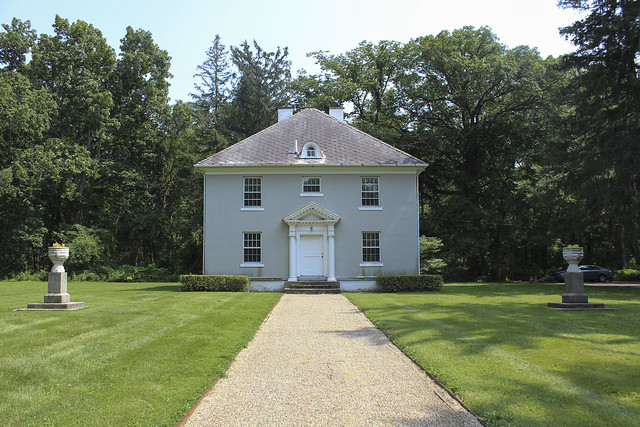
Allerton mansion in Illinois. Photo credit: Adapted from photo by Michael Morrow.

Although the mansion is listed on the National Register of Historic Places and the American Institute of Architects included the property on a list of "150 Great Places in Illinois" in 2007, Robert seemed to care most about the gardens, hoping they would be made available to the public. Today, one can  tour what Robert called "The Farms" (now known as the Allerton Park and Retreat Center), or even stay overnight.

The National Park Service designated  The Farms' grounds a "National Natural Landmark" in 1970. The "Formal Garden Area", consisting of a series of gardens along a quarter mile walk, was developed around the same time as the mansion was constructed and constitutes just one component of The Farms. Robert later completed other projects on his property, including The Sunken Garden (ca. 1917), The House in the Woods (ca. 1917), The Death of the Last Centaur (ca. 1929), The Sun Singer (ca. 1931), and The Lost Garden (ca. late 1930s).


Estate entrance. Photo credit: CECrane.

Friend and architect David Adler transformed Robert's landfill into The Sunken Garden. Photo credit: Adapted from photo by Ron Frazier.

The House in the Woods, designed by Joseph Corson Llewellyn and built in 1917, housed the estate's head gardener and his family. The front door is the mansion's original front door, repurposed here after the mansion was remodelled in 1916. Robert had the Shepherd and Shepherdess sculptures relocated from the Square Parterre Garden to frame the view of the home. Photo credit: CECrane.

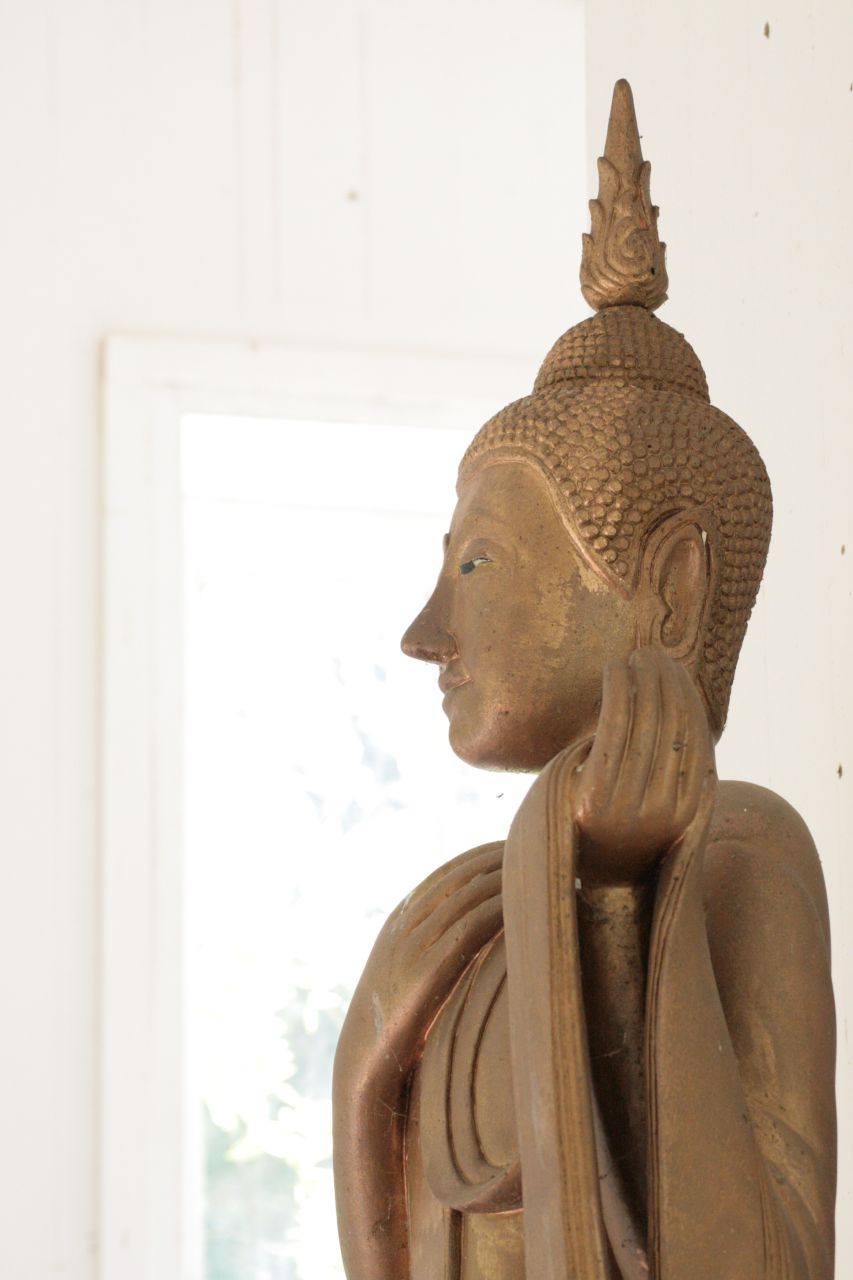
Sculpture in the House of the Golden Buddhas. Photo credit: Crystal.

Entrance to the Avenue of the Chinese Musicians. Photo credit: Adapted from photo by CECrane.

The Chinese Maze Garden layout is said to have been inspired by a pattern on Robert's silk pajamas and originally featured apple and pear trees espaliered along the concrete walls. Photo credit: Adapted from a photo by Ron Frazier.

The Sun Singer sculpture creator Carl Milles thought the siting of his work was "magnificent". See a photo of the statue undergoing restoration here. Photo credit: Adapted from a photo by Philip Brewer.

According to Burgin and Holtz (2009), Robert felt that a painting that hung on a wall in the same spot for too long soon went unnoticed, and likewise preferred to periodically rearrange his garden sculptures (except for the largest ones, which for logistical reasons apparently stayed put).

Robert travelled widely through Europe, Asia, and the Pacific, collecting pieces wherever he went. He narrowly missed boarding the Titanic on one trip home, and lost friends to that tragedy. Returning home on another trip with his adopted son John Wyatt Gregg, they made an impromptu stop in Hawaii, and ended up spending a night on the island of Kauai at the suggestion of prominent Honolulu citizen and Robert's childhood friend Louise Dillingham  because the Halekulani Hotel was full. Louise arranged for them to visit the McBryde property in Lawai while they were there.


Allerton Garden from above. The military installed barbed wire along the beach during World War II. The Allertons spent years afterwards removing bits of metal from the sand. Photo credit: Adapted from photo by Pat McGrath.

The McBryde property originally belonged to Queen Emma (1836-1885), who planted bougainvillea near her home (I've heard bouganvillea can still be seen on the property). The McBrydes purchased the property when she died. Using much of the property for farming sugar cane, taro, and rice, McBryde relocated Queen Emma's home from its cliff-top vantage point overlooking the valley down into the valley to accommodate expansion of sugar cane production.

When Robert and John visited the property, it happened to be on the market for sale. They immediately seem to have fallen in love with it, and eventually made this place they called Lawai-Kai (kai in Hawaiian means "sea") their permanent residence. They quickly built a new house to replace the McBryde home. To mark their first New Year's Day there in 1939, they planted a breadfruit tree. They imported many statues from The Farms and exotic plants from their travels throughout the tropics. An expert stone worker named Mr. Yamamoto built several walls on the property.


Allerton home on Kauai. Photo credit: Adapted from photo by Cheryl Marland.

Photo credit: Adapted from photo by chuck b.

Over the course of decades, Robert and John worked around nature to create a garden unlike any other in Hawaii. Confining tropical plants to rigid lines in the European style was impossible, and so they learned to adapt their formal style to the growing habits of plants in this Polynesian island setting.

Just as at The Farms, John and Robert entertained many guests at Lawai-Kai, including Georgia O'Keeffe in 1939, who came to Hawaii to paint tropical fruit and flowers for the Dole Pineapple Corporation, and Richard Nixon forty years later in 1979.

The Lawai gardens were featured in both print and film. In the 1950s, Harper's Bazaar (written and illustrated by Cecil Beaton) and Life magazine (3/17/58) both ran articles, and South Pacific (1958) was filmed on the property. Jurassic Park and Lt. Robinson Crusoe (1966) are among several other movies filmed there.


John attempted to replicate the Italian Villa Farnese at Caprarola waterway in this area fronting the Lawai stream. Contractor Hironaka and employee Wataro made the shell from a mold, and the mermaids are replicas of sculptures by Libero Andreotti that Robert and John found at the 1939 World's Fair in New York. Photo credit: Adapted from photo by julie corsi.

Robert was instrumental in the founding of Pacific Tropical Botanical Gardens in 1964, and donated a million dollars to support the project and purchase the adjoining property (known today as McBryde Garden). Guided and self-guided tours of the Allerton and McBryde gardens, now under the auspices of the National Tropical Botanical Garden (NTBG), are available to the public. Robert and John supported the NTBG, Art Institute of Chicago, and Honolulu Academy of Art (now Honolulu Museum of Art) throughout their lives.


-

Sources and more information:

The Robert Allerton Story by Kathryn Hulme (1979)

Robert Allerton: The Private Man & The Public Gifts by Martha Burgin and Maureen Holtz (2009)

Allerton Park & Retreat Center
http://allerton.illinois.edu/

National Tropical Botanical Garden
http://ntbg.org/gardens/allerton.php

Wikipedia article - The Farms
https://en.wikipedia.org/wiki/Robert_Allerton_Park

Wikipedia article - Allerton Garden
https://en.wikipedia.org/wiki/Allerton_Garden

Note: I just happened to pick up the two books listed above, but there are several others out there that are probably just as interesting.

The origin of commercial strawberries

California strawberry field ca. 1985. Photo credit: Orange County Archives.

Although they grow wild across the globe, and can today be found in supermarkets nearly year round, strawberries weren't always so easy to come by. From 1908 to 1922, the word "strawberry" returns over 137,000 newspaper records in the Library of Congress' digitized newspaper collection, but the fourteen year increment from 1836 to 1850 returns just 2590. One newspaper reported strawberries in Brooklyn, NY cost fifty cents each in 1887; this would be over thirteen dollars today. The storied history of the modern strawberry involves royalty, international travel, and even a French spy.

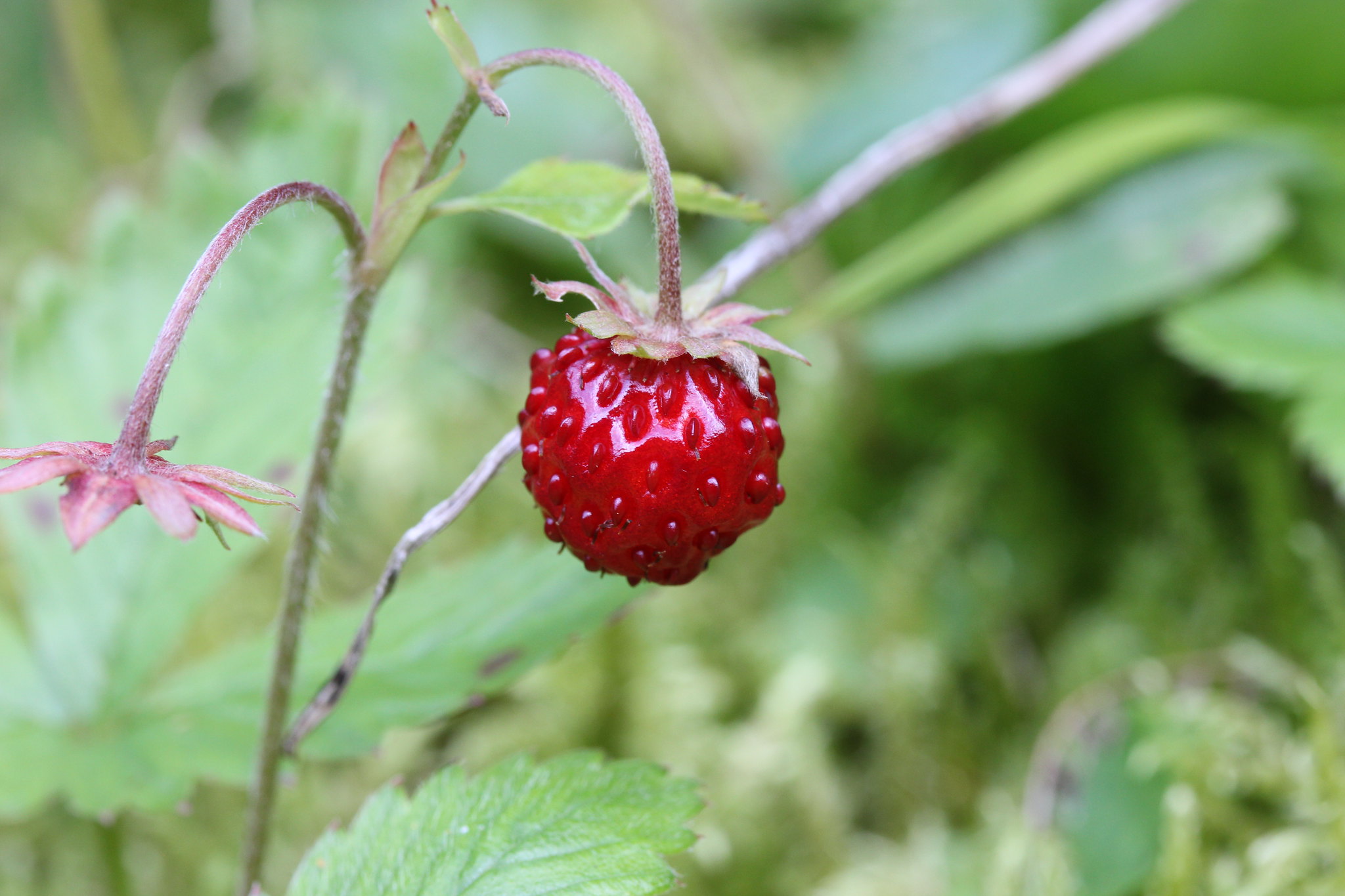
Fragaria vesca, a European species, may have been the first domesticated strawberry in the world. Cultivated by Romans and Greeks, the French began growing F. vesca in their gardens by the 1300s.


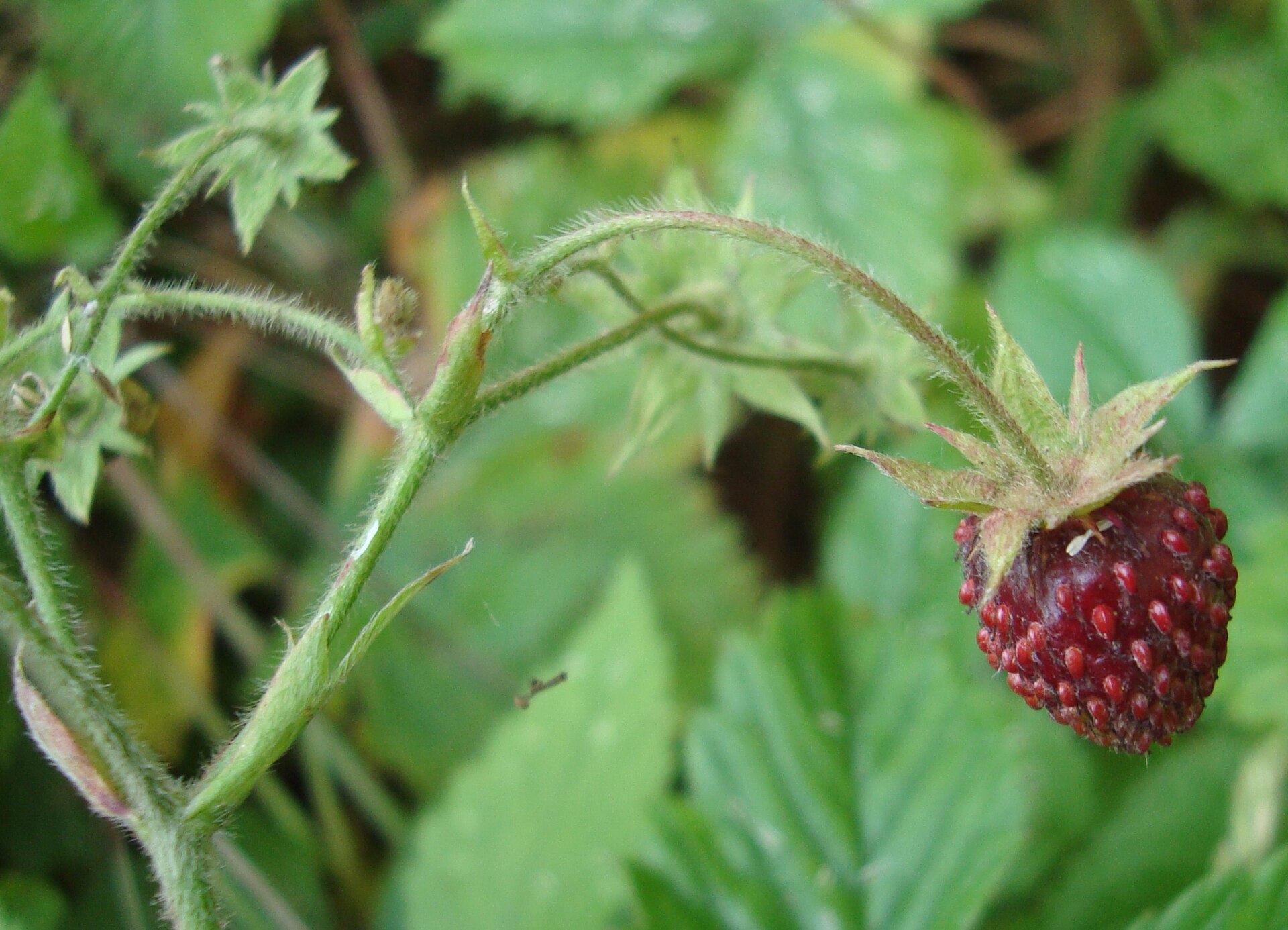
F. vesca fruit. Photo credit: Björn S....

About two hundred years later, the wild North American species F. virginiana was introduced to Europe by Jacques Cartier (explorer who discovered the St. Lawrence river in 1523) and gained a following there (although another source dates its introduction to France to 1624 and Darrow (1966) states little is known about how F. virginiana arrived in Europe except that it probably crossed the Atlantic in the early 1500s). At the end of the sixteenth century, F. vesca and F. moschata dominated gardens; there was also a third known species, F. viridis, commonly known as the green strawberry.

A Dragon-fly, Two Moths, a Spider and Some Beetles, With Wild Strawberries by Jan van Kessel, 17th century. Image credit: Wikipedia.

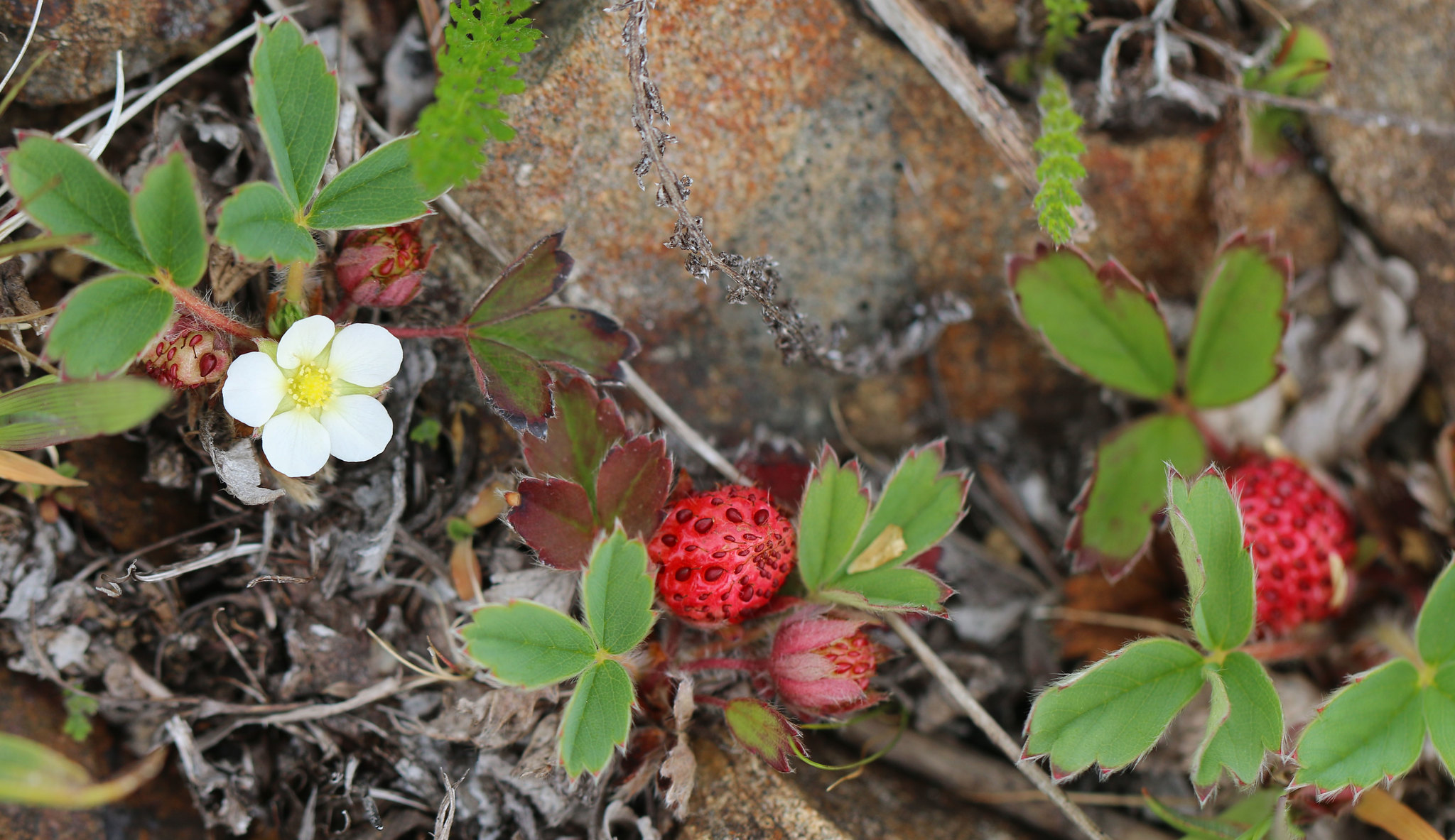
F. virginiana, North American wild strawberry. Photo credit: Wisconsin Department of Natural Resources.

F. moschata, native to Europe. Photo credit: Dendrofil.


At least a century later, French engineer and spy Amédée-François Frézier was mapping Spanish forts in Chile when he noticed F. chiloensis, a wild species known for its large fruit, and brought five specimens back to France in 1714. The voyage around Cape Horn took six months, and the plants had to be watered and cared for throughout the journey amidst freshwater rationing.

-

Some side notes:

After completing his studies, but before leaving for South America, Frézier visited Italy and grew fascinated by art and architecture. He wrote a book synthesizing what was known about fireworks and how to make them artistic displays in an era where pyrotechnics had focused solely on military uses. The book became an authority on the subject and garnered him a promotion.

The Mapuche and Huilliche tribes that lived in F. chiloensis' Chilean habitat were probably first to cultivate it because their languages contain words to distinguish wild strawberry from cultivated. Darrow (1966) states that these tribes were cultivating strawberry at least as long as Europeans.

 Frézier had named the Chilean strawberry F. chiliensis in reference to Chile, but Linnaeus later renamed it F. chiloensis.

-


A map of coastal Chile and Peru drawn by Frézier in the early 1700s. He also drew a map of Concepción where he found the Chilean strawberries. Image credit: Wikipedia.

An illustration of F. chiloensis in Frézier's book documenting his travels, published in the early 1700s. Frézier wrote to Duchesne (more on him below) in 1765 that "For half a real, which is the lowest money, one gets one or two dozens, wrapped in a cabbage leaf." Image credit: Wikipedia.

Fragaria chiloensis, coastal strawberry native to Chile. Photo credit: Peter Pearsall, U.S. Fish and Wildlife Service.

Frézier's plants did not bear fruit at first, disappointing French and English growers. French scholar Antoine Nicolas Duchesne (1747–1827) proved that some species of strawberry, like F. chiloensis, are dioecious, that is, male and female plants are required for fruit set, but only female plants of F. chiloensis had been imported. In 1764, when he was just seventeen, Duchesne brought King Louis XV a bowl of strawberries that he grew by pollinating F. chiloensis with pollen from F. moschata. Due to genetic differences in ploidy, perhaps not fully understood at the time, F. chiloensis would not cross with F. vesca. 

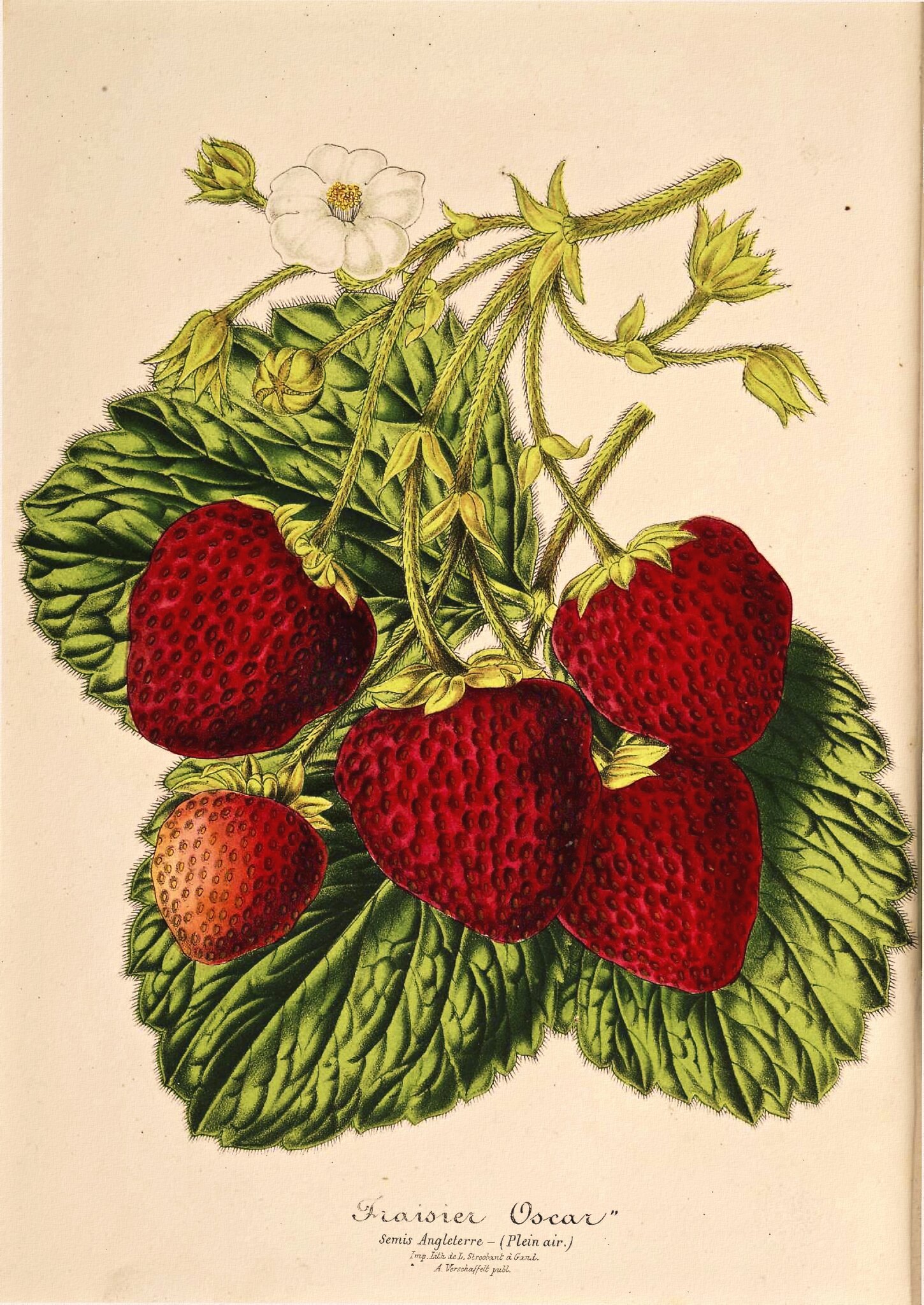
Reports of different looking fruits began to surface in Brittany, where F. chiloensis was widely grown. In a book he published in 1766 when he was just nineteen years old, Duchesne posited the theory (later proven) that the unusual fruit were the result of F. virginiana and F. chiloensis hybridizing. He named the hybrid Fragaria x ananassa as a tribute to the fruit's pineapple-like fragrance (Ananas being the genus of pineapple). By the end of the 1800s, F. chiloensis had become less popular in favor of hybrids.


Fragaria x ananassa var. Oscar circa 1870s. Image credit: Swallowtail Garden Seeds.

Interestingly, both F. virginiana and F. chiloensis occurred in North America in the wild, but Native Americans do not appear to have cultivated them.

Getting from wild varieties to modern commercial cultivars is a lengthy process of which Duchesne's discovery of F. xananassa is only the first step. The offspring of the hybrids must then be hybridized and back-crossed to the parents for reselection (Darrow (1966)). France may have birthed the modern strawberry in the 1700s, but England can be credited with the earliest breeding work to improve it.

By 1824, the Royal Horticultural Society knew twenty-six varieties of F. virginiana, none surpassing the wild strawberry in flavor, and there were several known varieties of F. chiloensis in England as well (which were considered by the English inferior to F. virginiana). Thomas Andrew Knight is credited with being the first to undertake systematic breeding of the strawberry. Another Englishman, Michael Keens, who was also breeding strawberries back then, developed the Keens Seedling variety that Darrow (1966) described as "an ancestor of most of today's leading varieties".

In the early 1800s in the U.S., most of the strawberries grown were the native  F. virginiana. Charles Hovey, a Massachusetts nurseryman and founder and long-time editor of what became Magazine of Horticulture, is credited with introducing one of the earliest popular cultivars in North America, aptly named 'Hovey', in 1836. By 1840, the Hovey commanded a tenth of strawberry fields, these mostly concentrated in New England.

The majority of strawberries in cultivation then were still native varieties, but in 1858, the introduction of the hardy Wilson variety by a Scottish New Yorker named John Wilson replaced native varieties and dramatically expanded the strawberry industry. Produced on roughly half the acreage dedicated to strawberries, the Wilson dominated the strawberry landscape in the latter half of the nineteenth century. Both the Wilson and Hovey resulted from growing out just one set of seedlings.

-

King Kamehameha IV of Hawaii, two years into his reign in 1857, invited readers of The Pacific Commercial Advertiser to his Nuuanu property to take home "the finest imported varieties" of strawberry, as his gardener was cleaning out the beds and they were about to be thrown out.

-

'Improved Wilson' ca. 1891. Image credit: U.S. Department of Agriculture Pomological Watercolor Collection. Rare and Special Collections, National Agricultural Library, Beltsville, MD 20705.

Darrow (1966) included maps showing where popular strawberry varieties were grown in the nineteenth and twentieth centuries. In the first half of the 1800s, cultivation was largely limited to New England and native wild varieties. By the late 1800s, cultivation expanded to the Midwest and South, largely due to the Wilson variety.

Between 1900 and 1920, the Dunlap variety swathed across much of the northern U.S., 'Klondike' its southern counterpart. 'Gandy' dominated the Northeast and eastern Midwest, 'Aroma' spanned Nebraska to Tennessee, 'Jucunda' much of Colorado, and 'Marshall' the West Coast. Paintings of these varieties, except for Jucunda, done in this era exist as part of the U.S. Department of Agriculture (USDA) Pomological Watercolor Collection and are reproduced below. Links in each caption link back to the original record and image file on the USDA site. But first, an antique postcard of a Texas strawberry field:
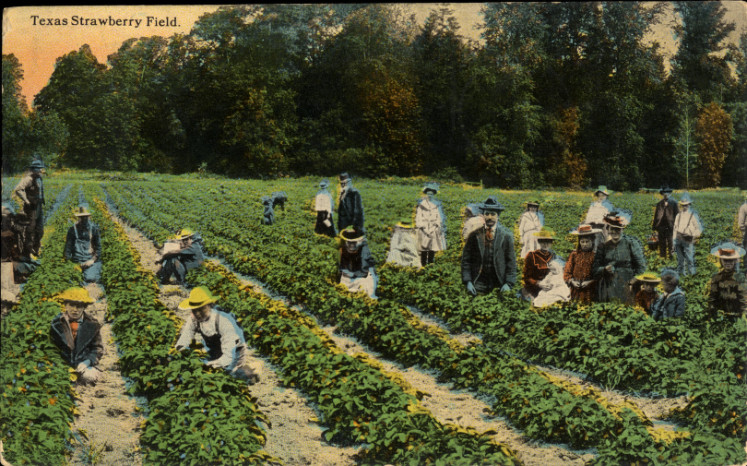

Postcard depicting a Texas strawberry field ca. 1908-1910. Image credit: Wikipedia.

'Dunlap' by Mary Daisy Arnold (1873-1955) in 1912. Image credit: U.S. Department of Agriculture Pomological Watercolor Collection. Rare and Special Collections, National Agricultural Library, Beltsville, MD 20705.

'Klondike' by Mary Daisy Arnold (1873-1955) in 1915. Image credit: U.S. Department of Agriculture Pomological Watercolor Collection. Rare and Special Collections, National Agricultural Library, Beltsville, MD 20705.

'Gandy' by Deborah Griscom Passmore (1840-1911) in 1906. Image credit: U.S. Department of Agriculture Pomological Watercolor Collection. Rare and Special Collections, National Agricultural Library, Beltsville, MD 20705.


'Aroma' by Bertha Heiges in 1900. Image credit: U.S. Department of Agriculture Pomological Watercolor Collection. Rare and Special Collections, National Agricultural Library, Beltsville, MD 20705.


'Marshall' by Bertha Heiges in 1904. Image credit: U.S. Department of Agriculture Pomological Watercolor Collection. Rare and Special Collections, National Agricultural Library, Beltsville, MD 20705.

Darrow (1966) lists Marshall, Klondike, Dunlap, and Aroma (images above), as well as the Missionary, Howard 17, Aberdeen, Blakemore, and Fairfax, as the most important varieties of the first half of the twentieth century. The Blakemore and Fairfax were created by Darrow himself. Some of the highlights of these varieties were:

  • Marshall
    Well suited to West Coast conditions; replaced by varieties with greater disease resistance in the mid 1900s.
  • Klondike
    A railroad shipping agent introduced this variety in 1901 after seeing the need for a strawberry that travels well; the leading variety for three decades until the Blakemore displaced it. Descends from a Hovey hybrid.
  • Dunlap
    Known for hardiness, flavor, and vigor.
  • Aroma
    Introduced in 1891 and a major variety between 1920 and 1940; good looking fruit, productive, and disease resistant.
  • Missionary
    Requires less chilling and fruits better in semitropics.
  • Howard 17
    Disease resistance and productivity are among its many positive traits; widely used in breeding. Its namesake Arthur B. Howard started systematically breeding strawberries in the late 1800s.
  • Aberdeen
    High yields, good flavor, but did not ship well.
  • Blakemore
    Cross of Missionary and Howard 17; ships well, disease resistant, more productive than Klondike, and ripens early.
  • Fairfax
    Disease resistant and exceptional flavor.


'Missionary' by Mary Daisy Arnold (1873-1955) in 1915. Image credit: U.S. Department of Agriculture Pomological Watercolor Collection. Rare and Special Collections, National Agricultural Library, Beltsville, MD 20705.

'Blakemore' ca. 1935. Image credit: U.S. Department of Agriculture Pomological Watercolor Collection. Rare and Special Collections, National Agricultural Library, Beltsville, MD 20705.

'Fairfax', undated. Image credit: U.S. Department of Agriculture Pomological Watercolor Collection. Rare and Special Collections, National Agricultural Library, Beltsville, MD 20705.

'Pocahontas' by Ellen Isham Schutt (1873-1955) in 1910. Image credit: U.S. Department of Agriculture Pomological Watercolor Collection. Rare and Special Collections, National Agricultural Library, Beltsville, MD 20705.

Like evolving fashions, strawberry varieties are continuously being replaced by new and improved selections. Blakemore, for example, replaced Klondike in the mid 1930s, but was itself replaced by newer varieties like Sparkle and Pocahontas (above).

So what varieties are grown in commercial fields today? Bloomberg reported that American Driscoll's varieties are typically around for just three years. Each year, Driscoll's selects new plants from amongst thousands to develop into new varieties, a process that takes up to seven years. In 1991, Driscoll's had six of its forty-two patented varieties in commercial production.

Driscoll's does not release its patented varieties to other growers, and considers University of California (UC) Davis' strawberry breeding program its primary competition. The UC program, which originated at UC Berkeley in the 1920s, has been criticized with restricting access to its varieties and has been the focus of recent legal action. Strawberry varieties comprise four of the UC's top ten income generating inventions. The breeding program had a million dollar surplus last year, supporting a billion dollar California industry, but nearly shuttered a few years ago without explanation.

Below are a few more paintings from the late 1800s to early 1900s of perhaps rarer varieties from the USDA Pomological Watercolor Collection. Botanically accurate, it is worth comparing the finer details depicted in the paintings of the varieties in this collection as there are noticeable visual differences.


Variety 'Timbrell', painted 1897. Image credit: U.S. Department of Agriculture Pomological Watercolor Collection. Rare and Special Collections, National Agricultural Library, Beltsville, MD 20705
 

Variety 'Early Ozark', painted 1913. Image credit: U.S. Department of Agriculture Pomological Watercolor Collection. Rare and Special Collections, National Agricultural Library, Beltsville, MD 20705.
 
Variety 'George Washington', painted 1913. Image credit: U.S. Department of Agriculture Pomological Watercolor Collection. Rare and Special Collections, National Agricultural Library, Beltsville, MD 20705.


Other sources and/or further information:

Perhaps the foremost modern authority on strawberries, The Strawberry by George M. Darrow (1966), available as PDF at https://specialcollections.nal.usda.gov/speccoll/collectionsguide/darrow/Darrow_TheStrawberry.pdf

USDA Pomological Watercolor Collection (also contains paintings of many other fruits, particularly apples)
https://usdawatercolors.nal.usda.gov/pom/about.xhtml

Big Bucks From Strawberry Genes Lead to Conflict at UC Davis (NPR The Salt, 2014)
http://www.npr.org/sections/thesalt/2014/07/02/327355935/big-bucks-from-strawberry-genes-lead-to-conflict-at-uc-davis

UC Davis Strawberry Breeding Program Historical Timeline
http://news.plantsciences.ucdavis.edu/2016/05/11/strawberry-breeding-program-backgrounder-a-historical-timeline/

A Patented Berry Has Sellers Licking Their Lips (NYTimes 1991)
http://www.nytimes.com/1991/10/14/us/a-patented-berry-has-sellers-licking-their-lips.html?pagewanted=all

How Driscoll's is Hacking the Strawberry of the Future (Bloomberg 2015)
http://www.bloomberg.com/news/features/2015-07-29/how-driscoll-s-is-hacking-the-strawberry-of-the-future

Sleuthing the Secrets to a Scrumptious Strawberry (2014)
http://blogs.scientificamerican.com/brainwaves/sleuthing-the-secrets-to-a-scrumptious-strawberry/ 

UC Davis strawberry breeding program under fire (The Californian 2015)
http://www.thecalifornian.com/story/money/2015/07/01/university-california-davis-california-strawberry-commission/29593819/

Strawberry ruling favors UC Davis (The Packer 2016)
http://www.thepacker.com/news/strawberry-ruling-favors-uc-davis

http://www.ars.usda.gov/is/kids/plants/story7/history.htm

http://naldc.nal.usda.gov/download/33602/PDF (PDF)

http://www.botgard.ucla.edu/html/botanytextbooks/economicbotany/Fragaria/index.html

List of Fragaria species from The Plant List:
http://www.theplantlist.org/tpl1.1/search?q=fragaria

https://www.vitalberry.eu/pineberries/
Related Posts Plugin for WordPress, Blogger...